

H13 Tool Steel
1.2344
- EN1.2344
- ENX40CrMoV5-1
- AISIH13
H13-type hot work steel (X40CrMoV5-1) with 5 % chromium and about 1 % vanadium. Hot strength, temper resistance and thermal-shock resistance suit it to aluminium extrusion, forging and die-casting tools at 44–52 HRC; it can be nitrided and coated.
Spectral Analysis
wt. % · EN ISO 4957 ranges- C
- 0.35–0.42
- Si
- 0.80–1.20
- Mn
- 0.25–0.50
- Cr
- 4.80–5.50
- Mo
- 1.20–1.50
- V
- 0.85–1.15
Typical ranges according to the standard, for information only. The analysis on the material certificate applies on delivery.
01Material Properties
- Good hot strength and temper resistance
- Thermal shock resistance
- Good high toughness and ductility
- Weldability
- Easy machining
- Hardenable up to 54 HRC by heat treatment
- Recommended working hardness 44–52 HRC
- Good nitriding response
- Suitable for coating
02Applications
- Aluminium extrusion dies and tooling: dies, backers, bolsters, rings, stems, dummy blocks
- Die inserts and dies for all press forging applications
- Shot sleeves and sleeve counterparts in die casting
- Secondary areas of die casting dies: gate inserts, heels etc.
- High-volume plastic injection molds and applications requiring wear resistance above 48 HRC
- Upper and lower dies in low-pressure die casting
- Gravity casting dies
- Industrial knives
03Delivery Condition
- Max. 229 HB, soft annealed (EN ISO 4957)
04Heat Treatment
Heat Treatment Steps
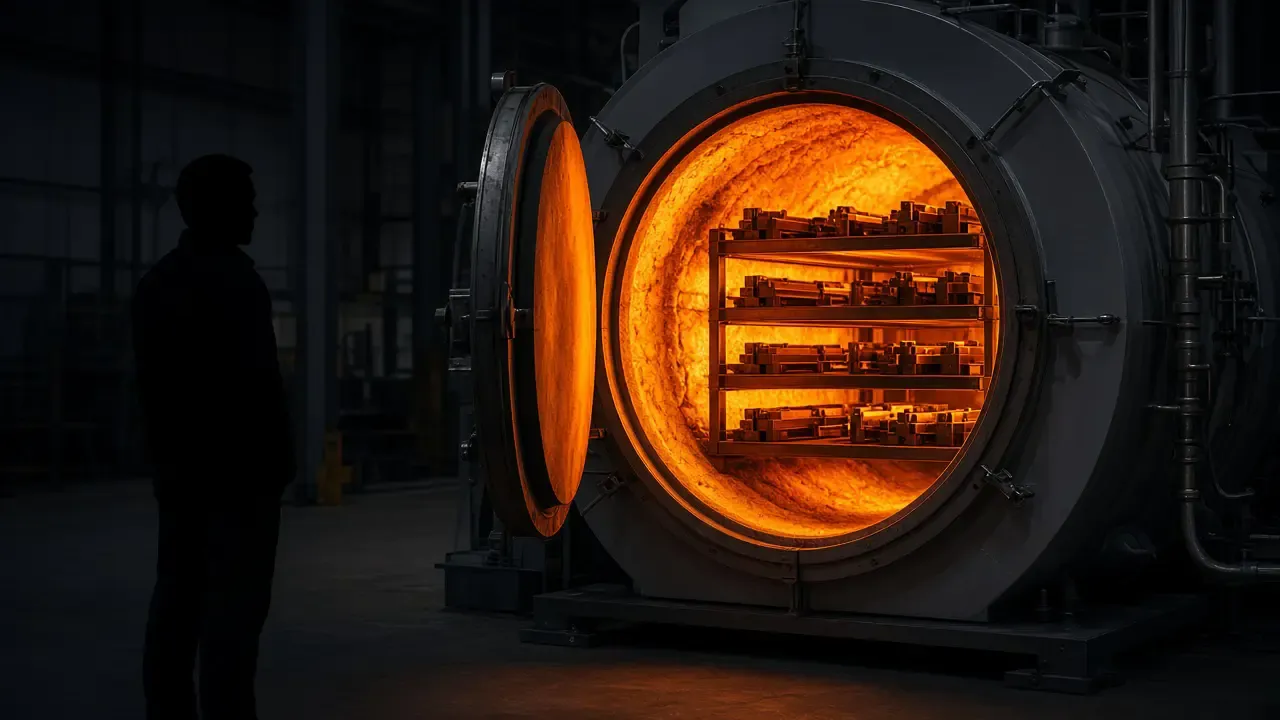
Quench: Pressurised gas in vacuum, oil, or 500–550 °C salt bath + air
Tempering Diagram
Values are approximate and for information only; they vary with section size, heat and furnace conditions. Binding values are determined from the manufacturer’s data under laboratory conditions.
05Mechanical Properties
Typical values by delivery and service condition; actual values depend on section size, heat-treatment parameters and production route (conventional / ESR).
| Condition | Hardness | Tensile strength Rm (MPa) | Note |
|---|---|---|---|
| Soft annealed (delivery) | Max. 229 HB | ≈ 780 (max.) | Machinable condition |
| Hardened (1020–1050 °C) | ≈ 52–54 HRC | — | Before tempering |
| Hardened + tempered | 44–52 HRC | ≈ 1400–1800 | Typical service range |
| Nitrided surface | ≈ 950–1100 HV | — | Core hardness retained |
Typical values; the applicable specification and material certificate govern for orders.
06Applicable Standards & Specifications
- EN ISO 4957 — Tool steels (X40CrMoV5-1)
- ASTM A681 — Alloy tool steels (H13)
- NADCA #207 — Die casting die steels (on request)
- SEP 1614 — Microstructure evaluation of hot work steels (on request)
- DIN 17350 (withdrawn, still used as a reference)
A product specification and an inspection document are different things: e.g. AMS 4928 is a product specification, EN 10204 3.1 is a type of inspection document; one does not replace the other.
07Microstructure & Metallurgical Properties
Typical microstructure informationH13 is a chromium-molybdenum-vanadium hot-work tool steel. Depending on the manufacturing route and heat treatment condition, its microstructure typically consists of a tempered martensitic matrix with dispersed alloy carbides.
Typical metallurgical characteristics
- Tempered martensitic matrix
- Chromium, molybdenum and vanadium carbides
- Good hot hardness and thermal fatigue resistance
- Properties influenced by hardening and tempering parameters
- 1.Typical microstructure
- In the hardened and tempered condition: tempered martensite with finely dispersed alloy carbides. In the soft-annealed delivery condition: spheroidised carbides in a ferritic matrix.
- 2.Heat treatment influence
- The austenitising temperature controls carbide dissolution and grain size; the tempering temperature sets the balance between hardness and toughness. Annealed and hardened-and-tempered 1.2344 do not show the same microstructure.
- 3.Grain structure
- Prior austenite grain size depends on austenitising temperature and time; excessive temperature can cause grain growth and loss of toughness.
- 4.Carbide / precipitate distribution
- Chromium, molybdenum and vanadium carbides. Carbide distribution depends on the production route (conventional / ESR) and heat treatment; ESR gives a more uniform distribution.
- 5.Metallographic examination
- Batch-specific metallographic examination is available upon request. A microstructure image alone does not prove chemical analysis, mechanical properties or certificate compliance.
Available technical documentation
- Chemical composition certificate
- Mechanical test report, where available
- Heat treatment information, where available
- Metallographic examination, upon request
Typical microstructure information. Actual microstructure may vary depending on manufacturing route, product form and heat treatment.
08Is there a better material?
Grades in the same material family as H13 with higher wear resistance and higher impact resistance (toughness); up to two suggestions under each heading. Which one fits depends on the application's priority requirement.
Higher wear resistance
- 1.2367
Wear resistance: Medium · same level, higher carbide volume / hot hardness (wear ranking 34 → 40)
- H21 Tool Steel
Wear resistance: Medium → High
Trade-off: Toughness
Higher impact resistance (toughness)
- H11 Tool Steel
Toughness: Medium · same level, tougher within the family (toughness ranking 50 → 56)
Trade-off: Temperature / temper resistance
- H13 ESR Tool Steel
Toughness: Medium → High
ESR (electroslag remelting) production: cleaner and more homogeneous structure; better toughness, isotropy and polishability.
Suggestions are based on the critical property levels in our grade data; an improvement in one property may require a trade-off in another. The final selection must be made by technical evaluation against operating conditions, heat treatment and specification.
For more information, browse our Technical Insights09Move Metal Supply Options
Move Metal is not a producer; we source the grade to your specification through our international producer and supplier network. Dimensions, quantity, delivery condition and documentation requirements are reviewed together.
Product forms
- Round bar
- Flat bar
- Plate
- Block
- Cut-to-size
Documents and testing
- EN 10204 3.1 inspection certificate (chemical analysis, delivery hardness)
- EN 10204 3.2 inspection certificate (on request, third party)
- Ultrasonic testing (e.g. SEP 1921, EN 10228-3)
- Microstructure and inclusion rating (e.g. SEP 1614, ASTM E45, EN 10247)
- Hardness test report (HB / HRC)
Not sure if H13 is the right material for your application?
Evaluate candidate materials by application, operating conditions and priority properties with the Material Selection Guide.
Find the Right MaterialTechnical resources for this material
- The 1.2344 Die Steel Cracked. Who Is to Blame?
- Hot Work Tool Steels: When to Choose 1.2344 or 1.2343
- Why Does ESR Matter for 1.2344?
- Thermal Shock and Thermal Fatigue in Die Casting Dies
- What Information Matters in a UT Report?
- Compare H13 with 1.2367
- Material Selection Guide
In the glossary
Have a material requirement?
Send us your specification, drawing or RFQ. Our team will review the requirement and identify a suitable supply option.