

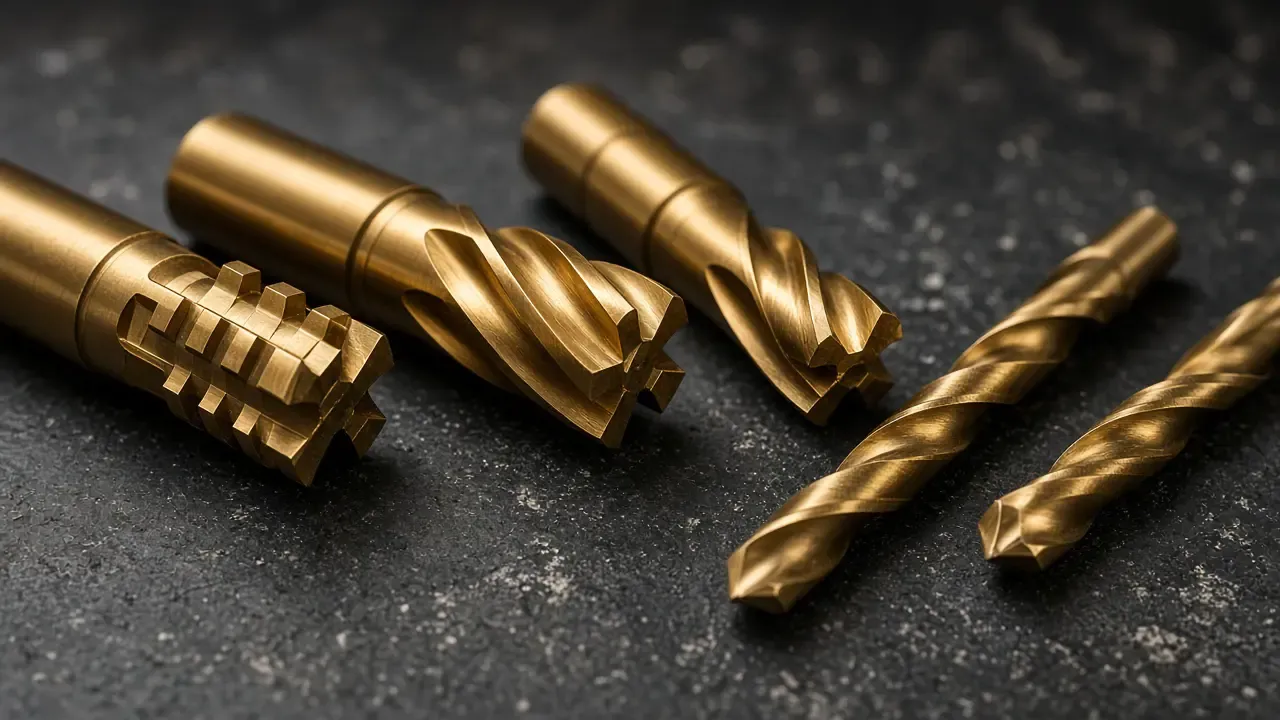
M2 • M35 • M42
High-Speed Steels (HSS)
HSS steel supplier in Turkey. Tungsten, molybdenum and cobalt alloyed steels that withstand high temperatures at the cutting edge, increasing cutting speed and tool life. Supplied for cutting-tool and wear applications.
01
Overview
High-speed steels (HSS) are high-carbon tool steels alloyed with tungsten, molybdenum, vanadium, chromium and often cobalt. Hardened from approx. 1170–1290 °C depending on grade and tempered at least three times at 540–580 °C, they reach 62–68 HRC through secondary hardening and retain their hardness when the cutting edge heats up (hot hardness). EN ISO 4957 designates them with HS codes showing the W-Mo-V-Co percentages (e.g. HS6-5-2C = M2); AISI uses the tungsten-based T and molybdenum-based M series. Cobalt increases hot hardness and vanadium increases wear resistance, at the expense of toughness and grindability. Selection weighs the workpiece material, cutting speed, impact load, coating and grinding conditions.
- Tungsten-based (T1 / 1.3355) and molybdenum-based (M2, M7) types
- Cobalt grades: M35 (5% Co), M42 (8% Co), HS10-4-3-10 (10% Co) — high hot hardness
- High-vanadium grades: M3:2, HS12-1-4-5 — high wear resistance
- Conventional or powder metallurgy (PM) production; PM gives a finer, more uniform carbide distribution
- Heat treatment requires a protective atmosphere or vacuum against decarburisation
- M50 (1.3551): HSS-based steel for bearings operating at elevated temperature
02
Material Grades
02.1
High-Speed Steels
M2 (1.3343), M35 (1.3243) and, upon request, M42 and other HSS grades.
Typical applicationsDrills, milling cutters, taps, broaches, saws and high-speed cutting-tool manufacturing.
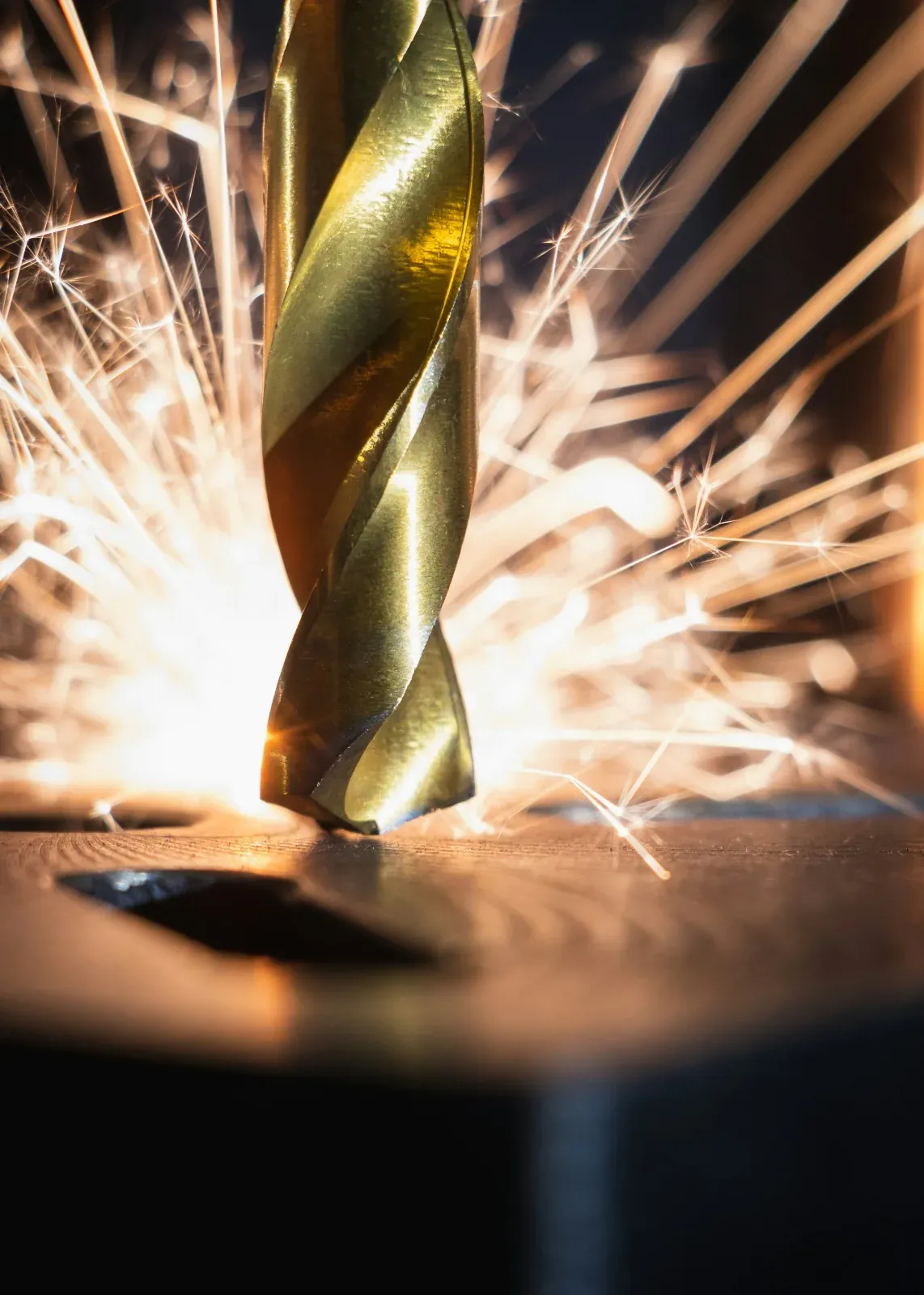
M35 High-Speed Steel
HS6-5-2-5·M35
Molybdenum-tungsten high speed steel with about 5% cobalt (M35). Compared with M2, the cobalt helps the cutting edge keep its hardness as it heats up; used for high-output milling cutters, drills, broaches and hobs.
M2 High-Speed Steel
HS6-5-2C·M2
Cobalt-free molybdenum-tungsten high speed steel (M2). Its use extends from drills, milling cutters, taps, reamers and circular saws to bolt and nut forming dies and cold extrusion punches.
M42 High-Speed Steel
Available on Request
1.3247·HS2-9-1-8·M42
High speed steel with 9–10% molybdenum and 8% cobalt, used at a working hardness of 66–69 HRC (M42). Applied in drills, milling cutters, taps and saw blades for stainless steel, titanium alloys and heat-treated materials.
T1 High Speed Steel
HS18-0-1·T1
Tungsten high speed steel with about 18% W and little molybdenum (T1), hardened to 63–65 HRC. Less sensitive to decarburisation in heat treatment; used for turning tools, form tools, broaches and reamers.
M3:2 High Speed Steel
HS6-5-3·M3:2
Mo-W high speed steel with vanadium raised to 2.7–3.2%, hardened to 64–66 HRC and more wear resistant than M2. Used for broaches, taps and hobs that cut abrasive materials; it is harder to grind than M2.
HS10-4-3-10 High Speed Steel
HS10-4-3-10
High speed steel with about 10% cobalt and 10% tungsten, hardened to 66–68 HRC and holding its hardness at high cutting temperatures. Used for rough machining of hard, heat-resistant materials; toughness is limited in interrupted cuts.
M7 High-Speed Steel
Available on Request
HS2-9-2·M7
High-molybdenum (8.2–9.2 %), low-tungsten, cobalt-free high-speed steel (AISI M7, HS2-9-2). Compared with M2 it has slightly higher carbon and molybdenum and offers a good balance of toughness and wear resistance. Supplied soft annealed to specification for cutting tools such as drills, taps and milling cutters.
M50 High-Temperature Bearing Steel
Available on Request
80MoCrV42-16·M50·6490 / 6491
Molybdenum-chromium-vanadium bearing steel based on high-speed steel metallurgy (AISI M50, 80MoCrV42-16). Because it is tempered at high temperature, it retains hardness and rolling contact fatigue strength up to about 300 °C. Supplied to specification in vacuum-melted (VIM-VAR) quality for aero-engine and turbine bearings.
HS12-1-4-5 High Speed Steel
Available on Request
S12-1-4-5·HS12-1-4-5·~T15 (yakın)
Tungsten-based high-speed steel with about 12 % tungsten, 4 % vanadium and 5 % cobalt (HS12-1-4-5), close in composition to AISI T15. The high vanadium carbide content raises wear resistance and the cobalt addition raises hot hardness. Supplied soft annealed on request for cutting tools used on hard and abrasive materials.
M4 High-Speed Steel
Available on Request
1.3351·HS6-5-4·M4
Cobalt-free Mo-W high-speed steel with high carbon (1.25–1.40 %) and high vanadium (3.75–4.50 %) (AISI M4, 1.3351, HS6-5-4). Its hard vanadium-rich MC carbides give higher wear resistance than M2 and M3:2; it is heat treated to a working hardness of 62–65 HRC. Supplied annealed on request for broaches, milling cutters and form tools that machine abrasive materials, and for cold-work punches.
03
Chemical Composition
| Grade | C | Cr | Mo | W | V | Co |
|---|---|---|---|---|---|---|
| M35 High-Speed Steel | 0.87–0.95 | 3.80–4.50 | 4.70–5.20 | 5.90–6.70 | 1.70–2.10 | 4.50–5.00 |
| M2 High-Speed Steel | 0.86–0.94 | 3.80–4.50 | 4.70–5.20 | 5.90–6.70 | 1.70–2.10 | — |
| M42 High-Speed Steel | 1.05–1.15 | 3.50–4.50 | 9.00–10.0 | 1.20–1.90 | 0.95–1.35 | 7.50–8.50 |
| T1 High Speed Steel | 0.73–0.83 | 3.80–4.50 | ≤0.70 | 17.2–18.7 | 1.00–1.20 | — |
| M3:2 High Speed Steel | 1.17–1.27 | 3.80–4.50 | 4.70–5.20 | 5.90–6.70 | 2.70–3.20 | — |
| HS10-4-3-10 High Speed Steel | 1.20–1.35 | 3.80–4.50 | 3.20–3.90 | 9.00–10.0 | 3.00–3.50 | 9.50–10.5 |
| M7 High-Speed Steel | 0.95–1.05 | 3.50–4.50 | 8.20–9.20 | 1.50–2.10 | 1.70–2.20 | — |
| M50 High-Temperature Bearing Steel | 0.77–0.85 | 3.90–4.30 | 4.00–4.50 | — | 0.90–1.10 | — |
| HS12-1-4-5 High Speed Steel | 1.30–1.45 | 3.80–4.50 | 0.70–1.00 | 11.5–12.5 | 3.50–4.00 | 4.50–5.00 |
| M4 High-Speed Steel | 1.25–1.40 | 3.75–4.75 | 4.25–5.50 | 5.25–6.50 | 3.75–4.50 | — |
Values in wt. %; ranges per each grade’s reference standard. The full list and reference standard are on the grade page. The analysis on the material certificate governs on delivery.
04
Mechanical Properties
For high-speed steels, mechanical properties are expressed as hardness. Values are typical delivery and heat-treatment data; the hardness achieved depends on section size, hardening temperature and number of tempers.
| Grade | Delivery hardness (soft annealed) | Hardening temperature (°C) | Working hardness (HRC) | Key characteristic |
|---|---|---|---|---|
| 1.3343 (M2) | max. 269 HB | 1190–1230 | 62–66 | General purpose; balance of toughness and wear resistance |
| 1.3243 (M35) | max. 269 HB | 1200–1240 | 64–67 | 5% Co; higher hot hardness than M2 |
| 1.3247 (M42) | max. 277 HB | 1170–1200 | 66–69 | 8% Co; high hot hardness, lower toughness than M2 |
| 1.3355 (T1) | max. 269 HB | 1260–1290 | 63–65 | Tungsten-based; less sensitive to decarburisation |
| 1.3344 (M3:2) | max. 269 HB | 1180–1220 | 64–66 | Higher wear resistance than M2 |
| 1.3348 (M7) | Stated on certificate | 1180–1210 | 63–66 | Molybdenum-based; good toughness and edge strength |
| 1.3207 (HS10-4-3-10) | max. 302 HB | 1210–1240 | 66–68 | 10% Co; very high hot hardness |
| 1.3202 (HS12-1-4-5) | Stated on certificate | ≈ 1220–1250 | 64–67 | High V and Co; very high wear resistance |
| 1.3551 (M50) | Stated on certificate | 1095–1120 | 60–64 | Bearing steel; VAR / VIM-VAR option |
Values are typical/approximate and match the data on the grade pages. The applicable specification and material certificate govern for orders.
05
Physical Properties
Approximate values at room temperature. Density increases with tungsten and cobalt content.
| Grade / group | Density (g/cm³) | Modulus of elasticity (GPa) | Thermal conductivity (W/m·K) | Coefficient of thermal expansion (10⁻⁶/K, 20–100 °C) |
|---|---|---|---|---|
| 1.3343 (M2) / 1.3344 (M3:2) | ≈ 8.1–8.2 | ≈ 210–230 | — | ≈ 10–11 |
| 1.3243 (M35) / 1.3207 | ≈ 8.1–8.2 | ≈ 210–230 | — | — |
| 1.3247 (M42) | ≈ 8.0 | ≈ 210–230 | — | — |
| 1.3355 (T1) | ≈ 8.7 | ≈ 210–230 | — | — |
| 1.3551 (M50) | ≈ 7.9 | ≈ 200–210 | — | — |
Approximate values; cells left as "—" where no reliable value is given. Use the producer data sheet for design values.
06
Applications
- Machining: drills, end mills, taps and dies
- Gear manufacturing: hobs, gear cutters, broaches
- Sawing: bimetal band saw teeth, circular saw blades
- Turning tools and form cutters
- Cold work tooling: punches, blanking and forming dies (M2, M3:2)
- Wood and plastics processing: planer and profile knives
- Industrial cutting knives: paper, packaging and metal cutting
- Bearings and aerospace: bearings operating at elevated temperature (M50)
07
Product Forms & Delivery Conditions
Product forms
- Round bar
- Flat bar
- Plate
- Cut-to-size
Available forms vary by grade and dimension.
Delivery conditions
- Soft annealed; max. approx. 269–302 HB depending on grade
- Conventional (ingot + forging / rolling) or powder metallurgy (PM) production, on request
- Vacuum melting (VAR / VIM-VAR) for specification grades such as M50
- Black (hot rolled / forged), peeled or ground surface
- Cut to size
- Hardened + tempered: on request, with heat-treatment coordination
08
Applicable Standards & Certification
Product standards and specifications
- EN ISO 4957 — Tool steels (including high-speed steels)
- ASTM A600 — High-speed tool steels (T and M series)
- DIN 17350 — Tool steels (withdrawn; material numbers still widely used)
- JIS G4403 — High-speed tool steels (SKH)
- AMS 6490 / AMS 6491 — M50 bearing steel (VAR / VIM-VAR)
Certification and inspection documents
- EN 10204 3.1 inspection certificate (chemical analysis, delivery hardness)
- EN 10204 3.2 inspection certificate (on request, third party)
- Carbide distribution / microstructure evaluation (e.g. SEP 1615)
- Decarburisation depth check
- Ultrasonic testing, on request
- Heat-treatment report (for hardened deliveries)
- PMI (positive material identification), on request
A product specification and an inspection document are different things: e.g. AMS 4928 is a product specification, EN 10204 3.1 is a type of inspection document; one does not replace the other.
Do you also generate HSS scrap?
Move Metal evaluates HSS scrap for international recycling channels. See our recycling page for scrap from cutting-tool production.
HSS RecyclingMaterial Availability & Supply Capability
Move Metal is not a producer; we focus on technical supply and international sourcing. The supply status of each grade is shown with the statuses below; a grade listed on the site does not mean it is held in stock.
- Regular Supply
- Materials with an established supply relationship, available for recurring requirements.
- Available on Request
- Materials sourced on request through our international producer and supplier network.
- Special Sourcing
- Requirements calling for special dimensions, certification or producer approval, sourced individually.
- Under Development
- Materials we are working to bring into our supply scope.
Please Include
- Grade (e.g. 1.3343 / M2) or equivalent standard
- Production route: conventional or PM
- Diameter / thickness, length and tolerance
- Surface: black, peeled or ground
- Delivery condition and hardness
- Carbide distribution or internal cleanliness requirements
- Certificate: EN 10204 3.1 / 3.2
- Quantity
Have a material requirement?
Send us your specification, drawing or RFQ. Our team will review the requirement and identify a suitable supply option.