

Grade 5 Titanium (Ti-6Al-4V)
Titanyum Grade 5 (Ti-6Al-4V)
Available on Request
- ASTMGrade 5
- UNSR56400
- AlaşımTi-6Al-4V
- EN3.7165
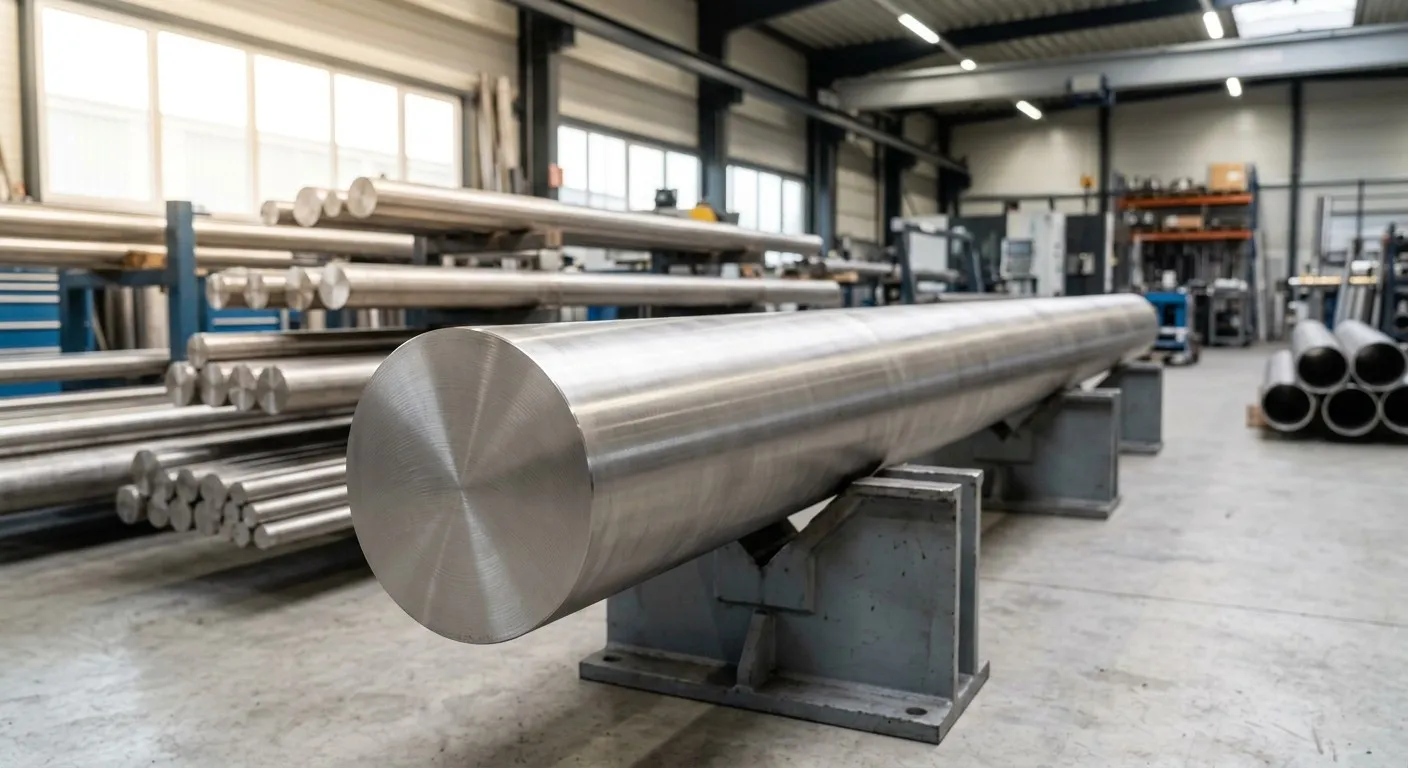
Grade 5 (Ti-6Al-4V) is an alpha-beta titanium alloy with 5.5–6.75 % aluminium and 3.5–4.5 % vanadium. Supplied annealed or solution treated and aged (STA), it is used in aerospace, defence and industrial parts that need high strength at low weight.
Spectral Analysis
wt. % · ASTM B348 ranges- Ti
- balance
- Al
- 5.50–6.75
- V
- 3.50–4.50
- Fe
- ≤0.40
- O
- ≤0.20
- C
- ≤0.08
- N
- ≤0.05
- H
- ≤0.015
Typical ranges according to the standard, for information only. The analysis on the material certificate applies on delivery.
01Technical Requirements
- Grade
- Standard (AMS 4928, AMS 4911, ASTM B348, ASTM B265 …)
- Heat-treatment condition (annealed, STA)
- Dimensions
- Tolerance
- Testing requirements
- Certification
- Origin
02Typical Applications
- Aerospace structural parts and fasteners
- Defense components
- High-performance industrial parts
- Medical and critical applications (ELI version)
03Need Grade 5 Titanium?
- Send us your specification and quantity; we will identify a suitable supply option.
04Heat Treatment
Heat Treatment Steps
Ageing Diagram
Values are approximate and for information only; they vary with section size, heat and furnace conditions. Binding values are determined from the manufacturer’s data under laboratory conditions.
05Mechanical Properties
Values by heat-treatment condition; standard minimums are shown with their specification, others are typical. Actual values depend on product form, section size and specification.
| Condition | Tensile strength Rm (MPa) | Yield strength Rp0.2 (MPa) | Elongation A (%) | Hardness | Note |
|---|---|---|---|---|---|
| Annealed — bar (ASTM B348) | ≥ 895 | ≥ 828 | ≥ 10 | — | Reduction of area ≥ 25 % |
| Annealed — sheet / plate (ASTM B265) | ≥ 895 | ≥ 828 | ≥ 10 | — | Depending on thickness |
| Annealed (typical) | ≈ 950–1000 | ≈ 880–920 | ≈ 12–16 | ≈ 30–36 HRC | Standard delivery condition |
| Solution treated + aged (STA, typical) | ≈ 1100–1200 | ≈ 1000–1100 | ≈ 8–10 | ≈ 36–41 HRC | Full response up to ≈ 25 mm section |
Elastic modulus ≈ 110–114 GPa, density ≈ 4.43 g/cm³. AMS 4928 / AMS 4911 minimums vary with section size; the applicable specification and material certificate govern for orders.
06Applicable Standards & Specifications
- ASTM B348 — Titanium and titanium alloy bars and billets (Grade 5)
- ASTM B265 — Titanium and titanium alloy strip, sheet and plate (Grade 5)
- ASTM B381 — Titanium and titanium alloy forgings (Grade F-5)
- AMS 4928 — Ti-6Al-4V bars, wire, forgings and rings; annealed
- AMS 4911 — Ti-6Al-4V sheet, strip and plate; annealed
- AMS 4965 — Ti-6Al-4V bars, wire, forgings and rings; solution heat treated and aged
- ASTM F1472 — Wrought Ti-6Al-4V for surgical implants
A product specification and an inspection document are different things: e.g. AMS 4928 is a product specification, EN 10204 3.1 is a type of inspection document; one does not replace the other.
07Microstructure & Metallurgical Properties
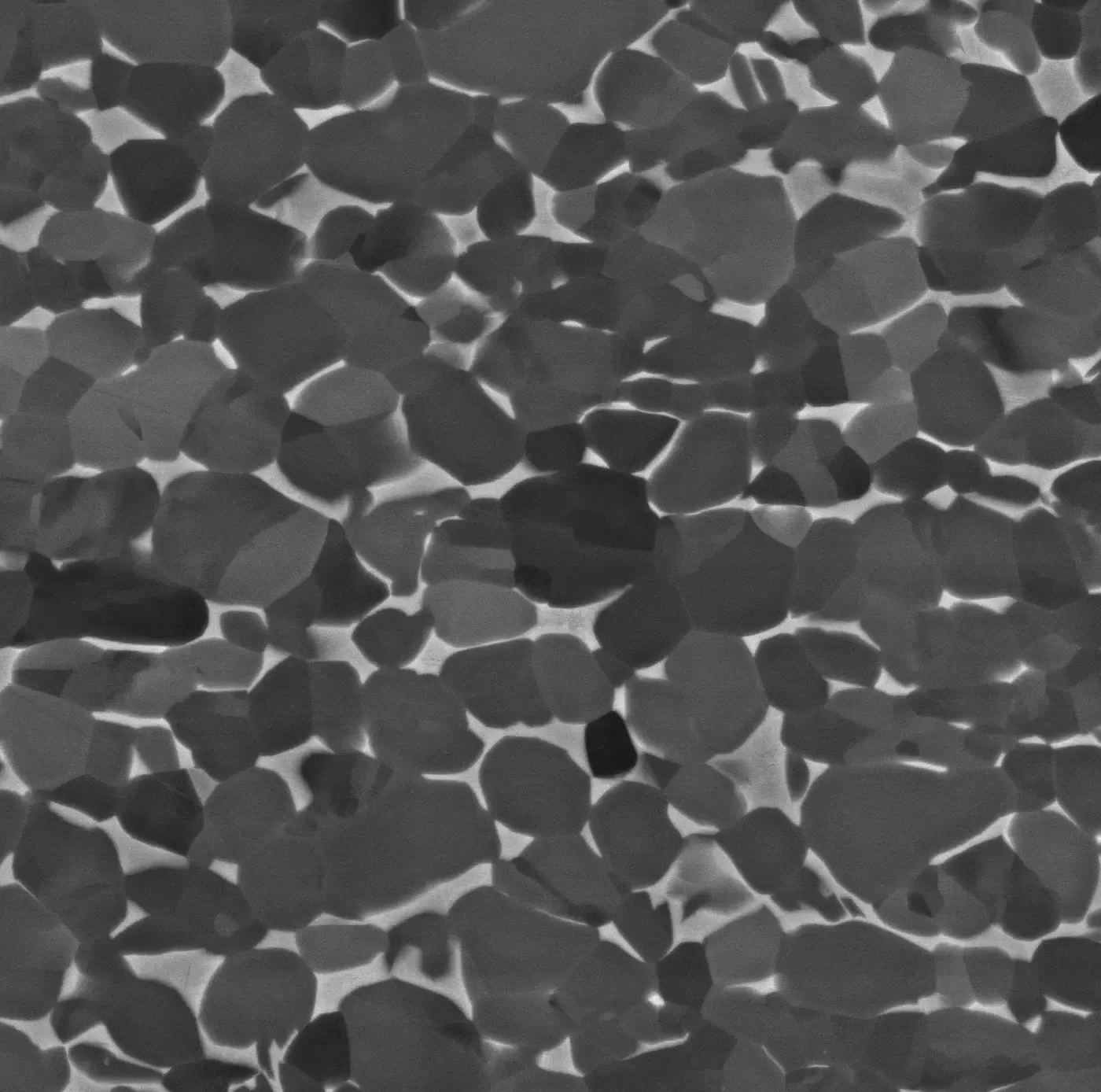
Typical microstructure informationTi-6Al-4V is an alpha-beta titanium alloy: aluminium stabilises the alpha phase and vanadium the beta phase. The microstructure typically consists of alpha (hexagonal) and beta (body-centred cubic) phases, whose morphology and proportion depend on thermomechanical processing and heat treatment condition.
Typical metallurgical characteristics
- Two-phase alpha + beta structure
- Equiaxed / bimodal when annealed, lamellar (Widmanstätten) above the beta transus
- Hardenable by solution treatment and ageing
- Phase morphology sets the balance of strength, ductility, fatigue and fracture toughness
- Oxygen content raises strength and lowers ductility and toughness
- 1.Typical microstructure
- Mill annealed: typically equiaxed or slightly elongated primary alpha grains with intergranular beta; recrystallisation / duplex annealing gives a bimodal structure (primary alpha + transformed beta). Material processed or heat treated above the beta transus (≈ 995 °C) develops a lamellar / Widmanstätten (basket-weave or colony) alpha structure.
- 2.Heat treatment influence
- Annealed, STA and beta-processed Ti-6Al-4V do not show the same microstructure. In STA, the solution temperature sets the primary alpha fraction; ageing precipitates fine secondary alpha within the transformed beta. A lamellar structure raises fracture toughness and crack-growth resistance but can lower ductility and fatigue strength.
- 3.Grain structure
- Grain size stays fine when processing in the alpha-beta field. Above the beta transus, prior beta grains grow rapidly, so heat-treatment temperatures are controlled relative to the beta transus.
- 4.Carbide / precipitate distribution
- Fine secondary alpha precipitates in beta after ageing. With high aluminium and oxygen contents and long exposure around 500–600 °C, alpha-2 (Ti₃Al) can form. An oxygen-enriched, hard alpha-case layer can form at the surface and is removed by machining.
- 5.Metallographic examination
- Batch-specific metallographic examination is available upon request. A microstructure image alone does not prove chemical analysis, mechanical properties or certificate compliance.
Available technical documentation
- Chemical composition certificate
- Mechanical test report, where available
- Heat treatment information, where available
- Metallographic examination, upon request
Typical microstructure information. Actual microstructure may vary depending on manufacturing route, product form and heat treatment.
08Is there a better material?
Grades in the same material family as Grade 5 Titanium with higher wear resistance and higher impact resistance (toughness); up to two suggestions under each heading. Which one fits depends on the application's priority requirement.
Higher wear resistance
- Ti-5Al-5V-5Mo-3Cr (Ti-5553) Titanium Alloy
Wear resistance: Low · same level, higher carbide volume / hot hardness (wear ranking 32 → 38)
Trade-off: Fatigue resistance, High-temperature strength, Toughness
Higher impact resistance (toughness)
- Grade 23 Titanium (Ti-6Al-4V ELI)
Toughness: High · same level, tougher within the family (toughness ranking 70 → 78)
Trade-off: Strength, Fatigue resistance
Suggestions are based on the critical property levels in our grade data; an improvement in one property may require a trade-off in another. The final selection must be made by technical evaluation against operating conditions, heat treatment and specification.
For more information, browse our Technical Insights09Move Metal Supply Options
Move Metal is not a producer; we source the grade to your specification through our international producer and supplier network. Dimensions, quantity, delivery condition and documentation requirements are reviewed together.
Product forms
- Round bar
- Flat bar
- Plate
- Sheet
- Tube
- Forgings
- Cut-to-size
Documents and testing
- EN 10204 3.1 inspection certificate
- EN 10204 3.2 inspection certificate (upon request, third party)
- Ultrasonic testing (e.g. AMS 2631; class as required)
- Chemical analysis including H, O and N
- Microstructure and alpha case examination
Supply status: Available on Request
Request Grade 5 Titanium QuotationNot sure if Grade 5 Titanium is the right material for your application?
Evaluate candidate materials by application, operating conditions and priority properties with the Material Selection Guide.
Find the Right MaterialTechnical resources for this material
Have a material requirement?
Send us your specification, drawing or RFQ. Our team will review the requirement and identify a suitable supply option.