
Why Is the Grade Name Alone Not Enough When Ordering Material?
The same grade name can be supplied with different standards, delivery conditions, tolerances and test requirements. We summarise the information a request should contain so that the right material arrives.
Published: Move Metal
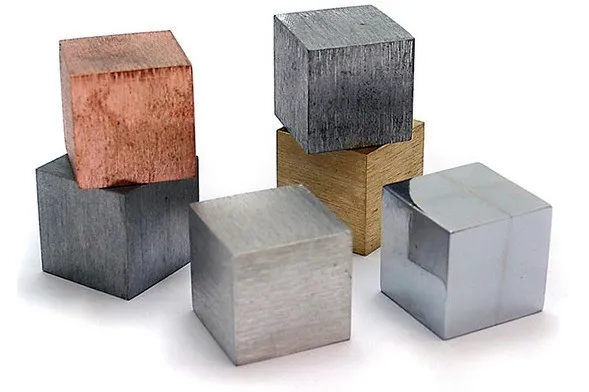
A request such as “we need 1.2379” or “we want Grade 5 titanium” is a starting point for sourcing, but it does not define the right material on its own. Quite different products can be supplied under the same grade name.
What the grade name does not define
- Standard and revision: The same grade may be defined with different limits in different standards.
- Delivery condition: Soft annealed, pre-hardened, quenched and tempered, solution treated or aged.
- Product form: Round, flat, block, plate, forging, tube.
- Size and tolerance: Black, peeled or ground surface; machining allowance.
- Production route: For example conventional or ESR.
- Inspection and testing: Ultrasonic testing and acceptance class, hardness, mechanical tests.
- Documents: EN 10204 3.1 / 3.2, CoC, certificate of origin.
What does missing information lead to?
- Quotations become impossible to compare; different suppliers price different conditions.
- Additional heat treatment, machining or testing may be needed after the material arrives.
- In critical applications, the material may not be accepted.
Information recommended in a request
- Grade and standard (with revision)
- Form and full dimensions
- Quantity (pieces or kg)
- Delivery condition and required hardness
- Testing and inspection requirements
- Certificate type and origin requirement
- Brief information on the application (a technical drawing if possible)
Application information makes the evaluation easier, especially when an alternative grade or delivery condition needs to be proposed.
Tags#Teknik Not#Tedarik#Spesifikasyon